Slickrock Trail in Moab: Ride the Stone Wave & Your Tiny Home Basecamp

Slickrock Trail in Moab: Ride the Stone Wave & Your Tiny Home Basecamp

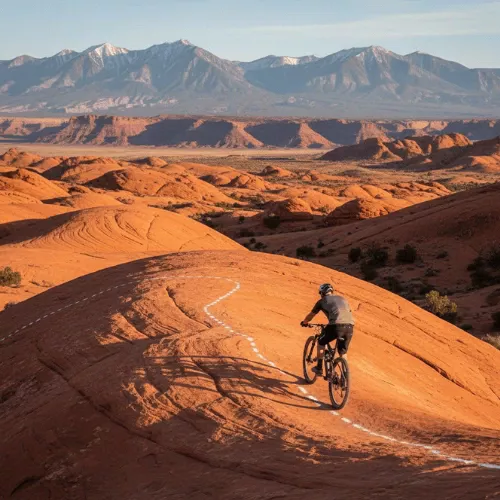
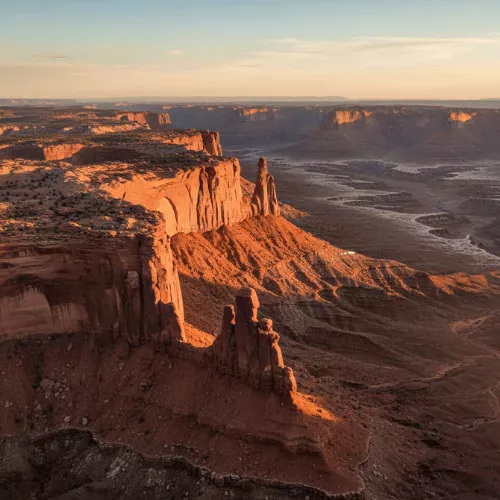
Ask any mountain biker to name the trail—the one that is burned into their brain—and chances are they will say it: Slickrock. Set high above Moab in the Sand Flats Recreation Area, Slickrock is not a trail. It is a challenge. A dance. A legend. It is where your tires grip rock that looks unrideable. Where your legs burn, your lungs fire, and your whole body is locked into a rhythm that is equal parts pain and joy. This is not just another ride. It is the one you will talk about for years. And when the ride is done, Slickrock Cabin is where you recover, relive it, and gear up for more. Slickrock: Moab’s Legendary Stone Playground Slickrock Trail rolls over petrified sand dunes—ancient Navajo sandstone that offers surreal traction. The name comes from horses (who hated it). Bikes? Bikes love it. Here is what you will find: Steep, punchy climbs that look impossible—until you are halfway up Flowing domes and fast descents that feel like surfing frozen waves Painted white lines that wind across open rock like a puzzle begging to be solved Massive views: La Sal Mountains, Colorado River, and endless red canyon There is no dirt. No switchbacks. No trees. Just you, the rock, and the ride. Slickrock Trail Guide: Ride It, Hike It, Feel It Slickrock lives inside the Sand Flats Recreation Area, just minutes from downtown Moab. A small entrance fee gets you access to this world-class arena of stone. Practice Loop (2.3 miles) Shorter, but not easy. Expect steep sections, tight turns, and real effort. Ideal as a warmup or reality check before committing to the full loop. Full Loop (10.5 miles) Relentless. Glorious. Every climb leads to a view. Every descent begs for whoops. There is no flat cruising—just action. For seasoned riders only. On Foot Do not ride? No problem. Walking the route or wandering nearby slickrock lets you feel the energy and soak in the views. Sunrise and Sunset Even without riding, the golden-hour light up here is magic—spilling across domes and glowing off the La Sals. Best Times to Ride Spring/Fall: Ideal temperatures, perfect traction Summer: Start at dawn or go at golden hour—midday heat is brutal Winter: Rideable if dry, but check for snow and ice After Rain: Avoid—wet sandstone is slick and fragile What Nobody Tells You The “practice loop” is still a test. Walking parts is totally normal—even pros dab here. The grip is unreal, but the effort is even more real. Wind adds drama—especially on exposed ridges. Even if you only ride part, you will never forget the way it felt. Why Slickrock Stays With You Slickrock does not fade into your ride log. You remember that first climb—you thought, “no way”… then cleaned it. You remember that dome where the view made you forget the burn. You remember that final mile, legs toast, brain buzzing, and still smiling like a kid. It is the kind of ride that turns into a story—the kind you will tell every time someone asks, “What is the best trail you have ever done?” Stay at Slickrock Cabin After Slickrock, you do not want to crash at a dusty motel with no bike space and zero soul. You want a space that knows the ride, knows the work, and helps you gear up for more. That is why we named one of our tiny homes Slickrock Cabin. Located at 1251 Millcreek Dr, Moab, it is just minutes from the Sand Flats entrance and Moab’s best bike shops and post-ride burritos. At Slickrock Cabin, you will find: Full kitchen for pre-ride fuel and post-ride feasts Private, gear-ready space to spread out, charge up, and dry out Climate control to cool down after sun-baked rock or warm up after sunset runs Soft bed and blackout shades to rest legs and quiet your mind You are minutes from: The trailhead Moab’s best bike shops (for gear, rentals, repairs) Post-ride food, beer, and recovery coffee If Slickrock is your Moab goal, Slickrock Cabin is your launchpad. Primary CTA button: Text: Check Availability for Slickrock Cabin URL: /cabins/slickrock Secondary CTA link: Text: Explore All Moab Tiny Homes → URL: /cabins Frequently Asked Questions Q: Is Slickrock beginner-friendly? A: Not really. It is rated advanced for a reason: steep, physical, and exposed. New riders can explore the practice loop or start with easier trails like Moab Brand Trails before tackling the beast. Q: How long does the full loop take? A: Two to four hours, depending on fitness, heat, and how often you stop. It is a grind—but a glorious one. Q: Do I need a special bike? A: A quality mountain bike with good brakes and low gearing is a must. Hardtail or full-suspension both work. E-bikes may be restricted on some trails—check current regulations. Q: Is there an entrance fee? A: Yes. Sand Flats charges a small per-vehicle fee, and it is worth every cent to keep the area maintained. Q: What should I bring? A: Water (more than you think), helmet, sunscreen, snacks, repair kit, and a camera. And maybe an ego check—it is humbling out there. More Moab Adventures from Your Cabin → Sand Flats: Moab’s Backyard Playground (/activities/sand-flats) → Mill Creek Falls: Desert Oasis & Swimming Holes (/activities/mill-creek-falls) → Corona Arch: The Underrated Stone Giant (/activities/corona-arch) → La Sal Mountains: Alpine Majesty & Desert Views (/activities/la-sal-mountains) → Red Rock: The Iconic Moab Landscape (/activities/red-rock) → See All Moab Activity Guides → (/activities)

Slickrock Trail in Moab: Ride the Stone Wave & Your Tiny Home Basecamp

Red Rock in Moab: The Iconic Landscape & Your Tiny Home Basecamp

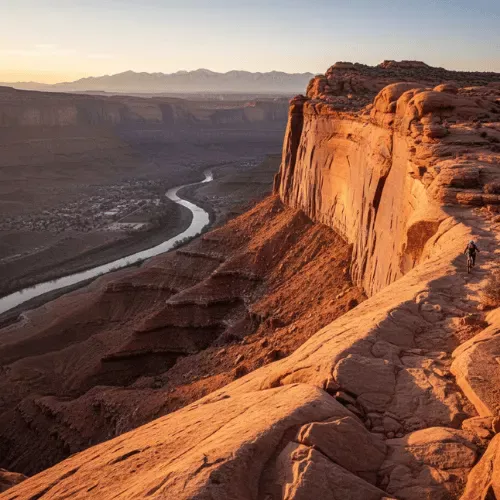
When people picture Moab, they picture red rock. It is the defining feature—the backdrop to every adventure, and the very soul of this desert town. From towering cliffs to sculpted canyons, the vibrant hues of sandstone surround you and shift with every move of the sun. Red rock is not just a geological feature; it is an experience—the feeling of vastness, the quiet power of ancient formations, and the endless beauty that greets you around every corner. This is where you come to be immersed in the classic Moab landscape. Red Rock: The Heartbeat of Moab The red rock formations around Moab are primarily composed of Navajo Sandstone and Entrada Sandstone, laid down hundreds of millions of years ago and sculpted by wind, water, and time. These layers tell the story of ancient seas, sprawling deserts, and dramatic uplift. Everywhere you look, you will find: Towering Cliffs: Sheer walls that glow crimson at sunrise and sunset Sculpted Canyons: Intricate networks carved by flash floods and persistent streams Natural Arches and Bridges: Iconic formations that defy gravity and inspire awe Vast Vistas: Expansive views that stretch to the horizon, painted in shades of red, orange, and gold The magic of red rock is its constant transformation. A cloudy day brings out deep, muted tones, while a clear sunset ignites the landscape in fiery brilliance. Red Rock Visit Guide: How to Experience It Experiencing Moab’s red rock is as simple as stepping outside. It is the air you breathe, the ground you walk on, and the view from every window. Ways to Immerse Yourself: Scenic Drives: Take Highway 128 (Upper Colorado River Scenic Byway) or Potash Road (Highway 279) for sweeping roadside views and unforgettable pullouts. Short Hikes: From quick walks to iconic overlooks, paths in Arches and Canyonlands National Parks (and nearby BLM land) put you close to incredible formations. Sunrise and Sunset: Find a high vantage point—like a slickrock outcrop, roadside overlook, or a quiet canyon wall—and watch the light show unfold. Photography: The red rock is a photographer’s dream with endless compositions, dramatic lighting, and changing shadows that tell a different story every hour. A Few Things to Know The sun is intense. Always wear sun protection and carry plenty of water. Stay on marked trails to protect fragile cryptobiotic soil and for your safety. Leave no trace. Respect this ancient landscape—it deserves care and reverence. What Nobody Tells You Red rock is not just one shade of red—it is a spectrum: deep maroon, fiery orange, soft pink, and even purple. The quiet here is profound. Away from main roads, silence amplifies the vastness. You will find ancient petroglyphs and pictographs tucked into unexpected places—whispers of the people who walked here long before. The smell of the desert after rain—earthy, clean, wild—is unforgettable. Every turn in the road, every trail you choose, reveals a completely different viewpoint of the same sculpted rock. Why Red Rock Sticks With You The red rock of Moab is more than scenery—it is a feeling. You remember the warmth of the sun on the stone. You remember how shadows played across a canyon wall. You remember the sheer scale of it all—making you feel both small and utterly alive. This is the essence of Moab—a landscape that imprints itself on your soul. Stay at Red Rock Cabin After a day immersed in iconic red rock landscapes, you will not want a dusty motel or a noisy hallway. You will want a place that feels like a natural extension of the desert beauty—serene, vibrant, and comforting. That is why we named one of our tiny homes Red Rock Cabin. All of our tiny homes are located at 1251 Millcreek Dr, Moab, Utah, giving you effortless access to scenic drives, trails, and classic viewpoints that showcase Moab’s legendary red rock. Red Rock Cabin is your perfect basecamp for soaking in the quintessential Moab experience. At Red Rock Cabin, you will find: A full kitchen for prepping meals before sunrise hikes or cozy dinners after long days A private, comfortable space to relax with decor inspired by the landscape outside Climate control to cool off after a hot day or warm up on crisp desert nights A soft bed and quiet setting for restful sleep—ready to chase another adventure tomorrow You are minutes from: Scenic highways like 128 and Potash Road Entrances to Arches and Canyonlands National Parks Downtown Moab’s shops, restaurants, and galleries If the iconic red rock landscape is what draws you to Moab, then Red Rock Cabin is your ideal home away from home. Primary CTA button: Text: Check Availability for Red Rock Cabin Secondary CTA link: Text: Explore All Moab Tiny Homes → URL: /cabins Frequently Asked Questions Q: What is the best time of day to see red rock? A: Sunrise and sunset (the “golden hour”) offer the most dramatic lighting, making the sandstone glow. Midday light is harsher, but cloudy days bring out richer, muted hues. Q: Are there easy ways to see red rock without a long hike? A: Absolutely. Scenic drives (Highway 128, Potash Road) offer countless pullouts, and many viewpoints in Arches are just a short walk from the parking area. Q: Why is the rock red? A: The red color comes from iron oxides (rust) in the sandstone. Over eons, these minerals stained the rock, giving it its legendary hue. Q: Is it safe to explore off-trail on the red rock? A: It is best to stay on marked trails—fragile soil, unexpected drop-offs, and unstable surfaces make off-trail travel risky and damaging. Q: What should I bring when exploring red rock? A: Water, sun protection (hat, sunscreen, sunglasses), sturdy shoes, a map or offline GPS, snacks, and your camera—because you will want to capture every angle. More Moab Adventures from Your Cabin → Mill Creek Falls: Desert Oasis & Swimming Holes (/activities/mill-creek-falls) → Delicate Arch: Moab’s Most Iconic Hike (/activities/delicate-arch) → Corona Arch: The Underrated Giant (/activities/corona-arch) → Fisher Towers: Towering Desert Giants (/activities/fisher-towers) → Sand Flats: Slickrock, Sunrise Ridges & Adventure (/activities/sand-flats) → See All Moab Activity Guides → (/activities)
Red Rock in Moab: The Iconic Landscape & Your Tiny Home Basecamp
Moab Rim in Moab: Big Climb, Bigger View & Your Tiny Home Basecamp

Moab Rim in Moab: Big Climb, Bigger View & Your Tiny Home Basecamp

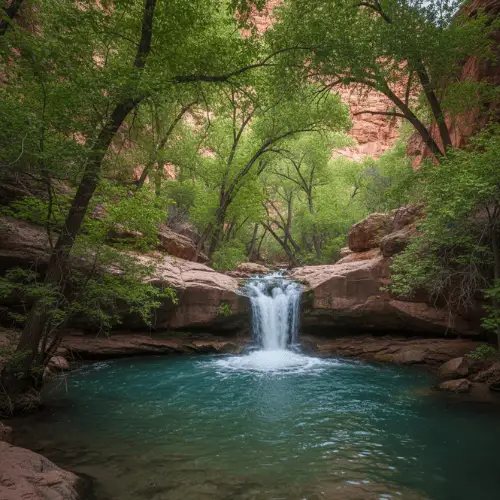
Some hikes invite you gently into the wild. Moab Rim does not ask. It dares. From the first step, the trail means business—rising sharply from the valley floor like it is chasing the sun. It is a grind, a challenge, and a full-body conversation with gravity. But what you get in return? Views so massive they rewire your sense of scale. Moab Rim Cabin is for those who live for that trade: steep ascents, staggering vistas, and a quiet, grounded home to return to after the dust settles. Moab Rim: Straight Up to the Skyline Just outside of town, near the Colorado River, Moab Rim launches upward—fast. It is part brute-force climb, part geological spectacle, and entirely unforgettable. This is where 4x4s crawl, hikers grind, and the desert opens up beneath you like a living map. What you will find: A lung-testing ascent with immediate payoff—no waiting for the view Massive sandstone ledges and slickrock shelves, shared with off-roaders Vistas that keep expanding—Moab, the Colorado River, La Sal peaks, and more A high rim vantage that turns hikers into philosophers From up top, it is not just the town you see—it is the entire stage of southeastern Utah, laid out in red, gold, and shadow. Moab Rim Visit Guide: Trail Details & Tips This trail is not about ease. It is about effort, endurance, and the reward that only comes from earning it. Trail Stats (approximate): Distance: 5–7 miles round trip, depending on turnaround Elevation Gain: Serious. Expect 900–1,000+ feet in the first mile alone Difficulty: Strenuous Time: 3–5 hours depending on pace and photo breaks What to Expect: No warm-up—the climb hits immediately Shared route with 4x4s—expect dust and rumble Little shade—bring more water than you think you need Viewpoints all the way up—turn around when it feels right This trail does not care if you reach the top. It gives you glory step by step. Best Time to Go Spring and Fall: Prime conditions—cooler air, big light Summer: Go at dawn or golden hour—midday is brutal Winter: Beautiful, but check for snow and ice on slickrock sections What Nobody Tells You The first mile is a gut check. That is where you will know if today is the day. You do not have to summit. Every hundred feet gained reveals a whole new world. Off-road traffic is part of the story. It is loud, gritty—and somehow epic. The descent is just as gnarly. Respect your knees and pace yourself. Sunset light from Moab Rim? Think fire on stone, gold on canyon walls. Unreal. Why Moab Rim Stays With You Moab Rim is less a hike, more a proving ground. It strips the extras away and leaves you with the raw elements: stone, effort, breath, sky. You will remember: That pause—when you turned mid-climb and realized how far you had come. The way the river shimmered hundreds of feet below, quiet and slow. The moment the wind hit your face on the rim and the world opened up like a secret. This is not a trail you casually check off. It is one you tell stories about later—with a grin, a stretch, and just a touch of swagger. Stay at Moab Rim Cabin After a trail like that, you do not want to dodge housekeeping carts or tiptoe past strangers in the hallway. You want to shower, stretch, eat, and pass out in peace. That is why we created Moab Rim Cabin. A short drive from the trailhead and tucked into Moab’s east side, it is your post-hike sanctuary—designed for recovery, reflection, and one hell of a nap. At Moab Rim Cabin, you will find: A full kitchen for pre-hike fuel and celebratory post-hike carbs A calm, private space for stretching, foam rolling, or stargazing Climate control to cool off after a dusty ascent or warm up after a breezy descent A soft bed, blackout shades, and pin-drop quiet—you earned this rest You are just minutes from: Moab Rim trailhead and riverside turnouts Downtown eats, coffee, and cold brews—everything tastes better post-rim Gear shops and outfitters in case the trail tells you it is time for an upgrade If you love hikes that challenge your legs and expand your perspective, Moab Rim Cabin is your perfect place to land. Primary CTA button: Text: Check Availability for Moab Rim Cabin URL: /cabins/moab-rim Secondary CTA link: Text: Explore All Moab Tiny Homes → URL: /cabins Frequently Asked Questions Q: Is Moab Rim good for beginners? A: Honestly, no. It is steep, exposed, and physically demanding. Beginners should start with canyon or creek trails like Grandstaff Canyon or Mill Creek. Q: How long does it take? A: Three to five hours round trip depending on pace, stops, and how far you go. Even a partial climb is a win. Q: Is the trail safe? A: For experienced hikers—yes. But expect loose rock, cliffside sections, and no shade. Always respect exposure and weather conditions. Q: Can I drive Moab Rim instead? A: It is one of Moab’s gnarliest 4x4 routes. Only for expert drivers with serious rigs. Do not attempt it lightly. Q: What should I bring? A: Grippy shoes, sun protection, snacks, lots of water, and offline maps. Trekking poles and a camera with real zoom are strong bonuses. More Moab Adventures from Your Cabin → Portal Overlook: Big Views, Bold Drops & Edge-of-the-World Energy (/activities/portal-overlook) → Corona Arch: The Underrated Stone Giant (/activities/corona-arch) → Sand Flats: Slickrock Playground & Sunrise Ridges (/activities/sand-flats) → Red Rock: The Iconic Moab Landscape (/activities/red-rock) → La Sal Mountains: Alpine Majesty & High-Desert Perspective (/activities/la-sal-mountains) → See All Moab Activity Guides → (/activities)
Moab Rim in Moab: Big Climb, Bigger View & Your Tiny Home Basecamp

Mill Creek Falls in Moab: Desert Oasis Hike + Your Perfect Basecamp

When most people picture Moab, they think of dry slickrock, arches, and wide-open desert. Mill Creek Falls is the surprise that changes that story—a shaded canyon with running water, swimming holes, and a waterfall you can actually play in. On hot days, it feels less like you're in the desert and more like you've stumbled into a secret oasis locals were hoping you wouldn't find. Mill Creek Falls: A Desert Waterfall Oasis Mill Creek runs through a narrow sandstone canyon just minutes from downtown Moab. Instead of baking in the sun, you're walking alongside (and often through) the creek itself, weaving between cottonwood trees, red rock walls, and pools of cool water. The main attraction is the falls: a small but powerful cascade pouring into a natural swimming hole. On warm days, you'll find hikers wading, kids splashing, and people stretched out on the rocks, letting the mist and canyon breeze cool them off. The soundtrack is totally different from the rest of Moab, too—less wind, more water. Less road noise, more laughter echoing off the canyon walls. Mill Creek Falls Hike Guide: Distance, Difficulty & Best Time Distance: Varies, but many people do 1–3 miles round trip Elevation gain: Minimal Difficulty: Easy to moderate (some creek crossings, light scrambling) Best time: Spring through fall, especially hot days The trail starts just a few minutes from town, which is part of what makes it so special—you don't have to drive an hour to feel like you're in another world. You'll follow social trails and main paths along the creek, crossing the water multiple times. Your feet will likely get wet. It's part of the fun. A few things to know: Footwear that can handle water and rocks makes the day a lot better. This area is popular; go early or later in the day if you want more quiet. Always respect posted signs and closures—this canyon is beloved and needs care. For a lot of guests, Mill Creek Falls becomes their "rest day" hike. After pushing hard in Arches or Canyonlands, they spend a slower morning here: wading, picnicking, reading on a warm rock beside the water. What Nobody Tells You → Go early (before 10 AM) or late (after 4 PM) to avoid the weekend crowds—this spot is no longer a secret → Bring water shoes or old sneakers you don't mind soaking—flip-flops won't cut it on wet rocks → The "falls" are seasonal—spring runoff makes them powerful, late summer reduces them to a trickle → There are multiple swimming holes—if the first one's crowded, keep walking upstream → Respect closures during nesting season (typically March–June)—peregrine falcons nest in the canyon Why Mill Creek Falls is Moab's Best "Rest Day" Hike Mill Creek Falls isn't dramatic in the same way Delicate Arch or Canyonlands are. It's quieter, softer, more intimate. It's the place you remember not because it was the biggest view, but because it was the first time on your trip you truly exhaled. It's where kids turn a hike into a swimming day. Where couples share a simple lunch on a shaded rock. Where solo travelers finally put their phone away and just listen to the water. In a landscape that's all about big vistas and long horizons, Mill Creek Falls reminds you that some of the best moments happen close in. Stay at Mill Creek Falls Cabin After a cool, shaded hike along the creek, it feels right to come "home" somewhere that's just as close and just as easy. That's why we named one of our tiny homes Mill Creek Falls Cabin. All of our tiny homes are located at 1251 Millcreek Dr, Moab, Utah—which means Mill Creek Canyon is truly in your backyard. You can hike in the morning, head back to your cabin to reset, and be downtown for dinner without ever feeling rushed. At Mill Creek Falls Cabin, you'll find: 🍳 A full kitchen for simple post-hike meals or snacks before sunset outings 🏡 A comfortable living space to dry off, cool down, and put your feet up ❄️ Climate control so you can escape the afternoon heat when you're done with the water 🛏️ A cozy bed and soft linens that make early-morning starts actually appealing You're minutes from: → Mill Creek Falls → Downtown Moab's coffee shops, restaurants, and gear stores → Easy drives to Arches, Canyonlands, Sand Flats, and more If Mill Creek Falls is your kind of Moab—a little wild, a little hidden, and easy to reach—then Mill Creek Falls Cabin is your kind of stay. 🔗 [Book Mill Creek Falls Cabin Now] Or 🔗 [Explore All Tiny Homes] Frequently Asked Questions Q: Is Mill Creek Falls kid-friendly? A: Absolutely. The easy terrain and swimming holes make it perfect for families. Just watch young kids near the water and bring water shoes for better traction. Q: Do I need a permit for Mill Creek Falls? A: No permit required, but check for seasonal closures (especially during peregrine falcon nesting season from March–June). Q: How long does the Mill Creek Falls hike take? A: 1–2 hours round trip for most people, but you can easily spend half a day swimming, exploring, and relaxing by the water. Q: Can I bring my dog to Mill Creek Falls? A: Yes, dogs are allowed but must be leashed. Be mindful of other visitors, especially families with kids in the swimming areas. Q: What should I wear for the Mill Creek Falls hike? A: Water shoes or sturdy sandals with good grip. Your feet WILL get wet from creek crossings. Bring a swimsuit if you want to swim, and sun protection for exposed areas. More Moab Adventures from Your Cabin: → Delicate Arch: Moab's Most Iconic Hike → Corona Arch: The Underrated Giant → Slickrock Trail: Mountain Biking Mecca → Mesa Arch at Sunrise: Photographer's Dream 🔗 [See All Moab Activity Guides]

Mill Creek Falls in Moab: Desert Oasis Hike + Your Perfect Basecamp
Fisher Towers in Moab: Stone Spires, Evening Light & Your Tiny Home Basecamp

Fisher Towers in Moab: Stone Spires, Evening Light & Your Tiny Home Basecamp

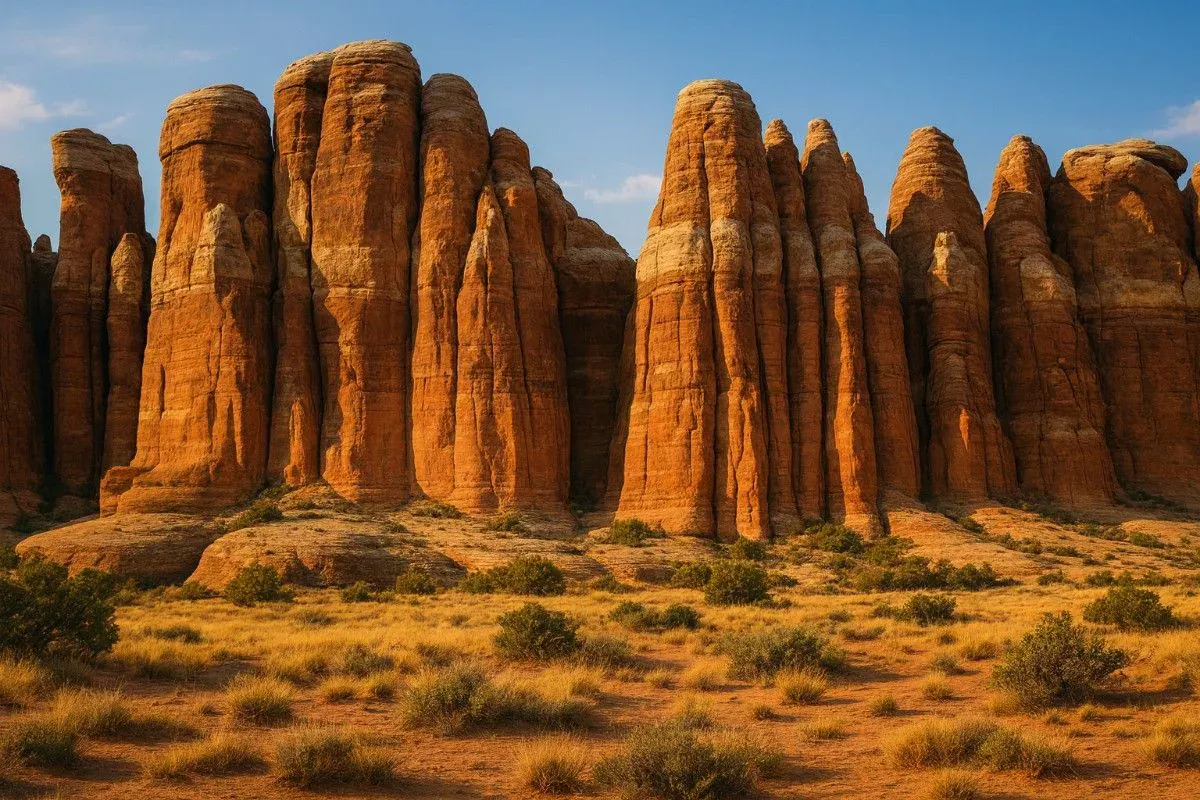
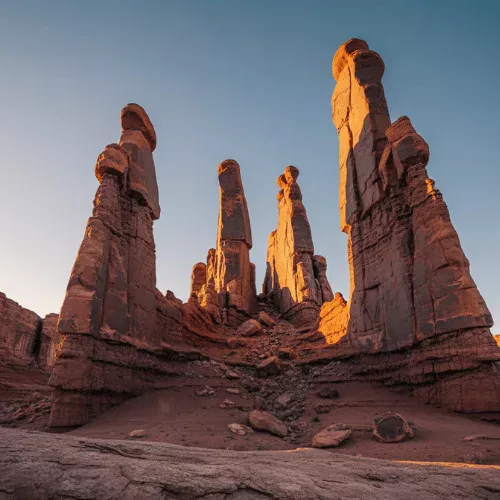
Drive out toward Castle Valley, and eventually the landscape does something dramatic. Stone spires start to rise from the earth—tall, twisted, impossibly thin in places. It feels like a skyline built by wind and time instead of steel and glass. That is Fisher Towers. Fisher Towers Cabin is for travelers who love the feeling of walking toward something otherworldly—towering cliffs, narrow fins, and spires that catch the last light of day like they were built for it. Fisher Towers: Moab’s Stone Cathedral Fisher Towers sits east of Moab along Highway 128, in the same corridor that leads toward Castle Valley. The main trail takes you along the base of enormous mudstone and sandstone towers, with views that only get better the farther you go. On the way, you will see: Huge, vertical spires rising straight from the desert floor Layers of red and purple rock stacked into surreal formations The La Sal Mountains floating in the distance behind the towers Rock climbers sometimes inching their way up impossibly steep faces It feels both intimate and enormous at the same time. Fisher Towers Visit Guide: Trail Details & Tips The Fisher Towers Trail is the classic way to experience the area. Trail Stats: Distance: ~4.0–5.0 miles round trip, depending on turnaround point Elevation gain: Moderate, with ups and downs Difficulty: Moderate—some exposure, uneven terrain, and minor scrambling Time: 3–4 hours, more if you stop often (you will) What to Expect: A well-used but sometimes rugged trail Sections with steps, narrow ledges, and short scrambly bits Huge views of towers, Castle Valley, and the La Sals Little shade—this is full sun hiking, especially mid-day Best Times to Visit: Morning: Cooler temps, quieter trail, soft side light Late afternoon to sunset: Prime time for tower glow and photography Shoulder seasons: Spring and fall offer the best combo of temps and light What Nobody Tells You The scale is hard to grasp until you are standing beneath the towers. Photos flatten them. Being there, craning your neck back, makes you realize just how massive and improbable they are. You do not have to hike the whole trail to get a big experience. Turning around halfway still feels epic—sometimes the first mile gives you the best tower views anyway. The sound of wind moving through the spires can be strangely soothing. It hums and whistles through the gaps, creating a low soundtrack to the whole hike. Watching climbers on the towers can make you feel both in awe and very grounded. Seeing tiny figures hundreds of feet up on crumbling mudstone puts your own adventure in perspective. Sunset can linger longer here—gold sliding slowly down the stone, catching every ridge and crevice. Stay a few extra minutes after you think it is over. Why Fisher Towers Stays With You Fisher Towers feels like a place that should not exist on this planet—and yet here you are, walking through it. You remember the first time the full height of a tower came into view and you instinctively looked up, then up some more, your brain recalibrating what “tall” means. You remember the way the stone glowed deep red as the sun dropped lower—not just surface color, but something that seemed to come from inside the rock itself. You remember the quiet between gusts of wind, broken only by footsteps crunching on sandy trail and the occasional distant call between climbers anchored to impossible walls. It is one of those hikes that feels like a portal—out of regular life and into something wilder, older, and more mysterious. The kind of place that makes you wonder what else is out there that you have not seen yet. Stay at Fisher Towers Cabin After a day weaving along the base of stone spires that defy logic, you want to come back somewhere simple, warm, and close enough to make the whole thing easy. That is why we named one of our tiny homes Fisher Towers Cabin. All of our tiny homes are located at 1251 Millcreek Dr, Moab, Utah—an easy drive from Highway 128 and the Fisher Towers turnoff, and still just minutes from downtown Moab for food, coffee, and gear. Inside Fisher Towers Cabin, you will find: A full kitchen for early trail breakfasts and well-earned dinners A quiet, private space to put your feet up, hydrate, and scroll through tower photos Climate control to help you reset after full-sun hiking A soft bed and blackout shades for real rest before your next big outing You are minutes from: The Highway 128 corridor toward Fisher Towers and Castle Valley Downtown Moab’s restaurants, groceries, and cafes Routes leading to Arches, Canyonlands, and the Colorado River If you are drawn to the strange, vertical, almost otherworldly side of Moab, Fisher Towers Cabin is your perfect base. Primary CTA button: Text: Check Availability for Fisher Towers Cabin URL: /cabins/fisher-towers Secondary CTA link: Text: Explore All Moab Tiny Homes → URL: /cabins Frequently Asked Questions Q: Is the Fisher Towers Trail family-friendly? A: It can be, for active families with older kids (around 8+). There are some narrow sections and small scrambles where close supervision is important. Very young kids may find it challenging or overwhelming. Q: Do I have to hike the whole trail? A: Absolutely not. Even hiking partway offers huge views and an incredible experience. The first mile or two gives you tower perspectives that feel massive—turn around whenever it feels right. Q: How exposed is the trail? A: There are some sections with drop-offs and narrow ledges, but many hikers with moderate experience handle it well. If you are uncomfortable with exposure, you can still enjoy the early portions of the trail without committing to the sketchier bits. Q: What should I bring? A: Lots of water (2L+ per person), sun protection (hat, sunscreen, sunglasses), sturdy shoes with good ankle support, snacks, and possibly trekking poles if you like extra stability. There is very little shade—this is an exposed desert trail. Q: Is it crowded? A: It is popular, but generally less crowded than major Arches trails like Delicate Arch. Early starts (before 9 a.m.) or later afternoons (after 3 p.m.) are usually quieter. Q: Can I see Fisher Towers without hiking? A: Yes. There are viewpoints from Highway 128 and the access road where you can see the towers from a distance. But walking the trail—even just the first mile—gives you a completely different, more powerful perspective. More Moab Adventures from Your Cabin → Castle Valley: Iconic Spires & Open Roads (/activities/castle-valley) → Corona Arch: The Underrated Stone Giant (/activities/corona-arch) → Mill Creek Falls: Desert Oasis & Swimming Holes (/activities/mill-creek-falls) → Delicate Arch: The Iconic Desert Window (/activities/delicate-arch) → Sand Flats: Slickrock Playground & Sunrise Ridges (/activities/sand-flats) → See All Moab Activity Guides → (/activities)
Fisher Towers in Moab: Stone Spires, Evening Light & Your Tiny Home Basecamp

Corona Arch in Moab: The Underrated Giant + Your Tiny Home Basecamp

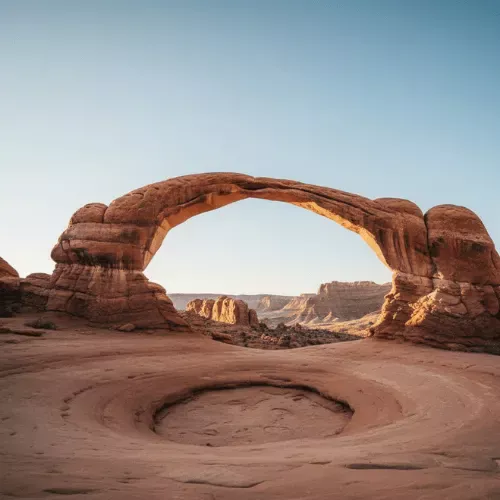
If Delicate Arch is the star of the show, Corona Arch is the cult favorite. It is huge, dramatic, and somehow still feels a little bit off the beaten path. Perched above a sweeping bowl of slickrock outside Arches National Park, Corona Arch gives you everything you want in a classic Moab hike without the park gate lines or heavy crowds. Corona Arch: Moab's Other Iconic Arch Corona Arch is a massive sandstone arch: about 105 feet tall and 140 feet across. It stretches from the cliff like a stone rainbow, framing the sky and distant canyon walls. Nearby, Bowtie Arch punctures the rock face with a perfect circular window, adding to the sense that you have wandered into a natural cathedral. Instead of feeling fenced in, the area around Corona Arch is wide open. You can move around, find your own vantage point, sit on the warm rock, and just take it all in. It feels wild and spacious in a way that surprises a lot of first-time visitors. Corona Arch Hike Guide: Distance, Difficulty & Best Time Distance: About 3 miles round trip Elevation gain: Around 400–500 feet Difficulty: Moderate (some exposure, cable and ladder sections) Best time: Morning or late afternoon The trailhead sits off Potash Road, along the Colorado River west of Moab. The hike begins on an old railroad grade, then transitions to open slickrock marked by cairns. Along the way you will: Climb a short metal ladder Use a fixed cable to traverse a tilted rock slab Walk across open slickrock with big views of the river corridor For most hikers, these features add a fun sense of adventure without feeling overly technical. You will know you are close when the walls open up and Corona Arch comes into view: huge, graceful, and bigger than you expected. A few things to know: Limited shade; avoid hiking during the hottest part of the day. Cable and ladder sections can feel exposed for some; take your time. Stay on marked routes to protect fragile soil and cryptobiotic crust. Parking is smaller than park lots; arrive early in peak season. What Nobody Tells You The approach along the old railroad grade is flat and uneventful. Do not judge the hike too early. Corona Arch feels more relaxed than many park viewpoints. People linger longer. Overcast days are fantastic. The color of the rock becomes richer and more dramatic. On windy days, the gusts rushing through the arch sound like a giant invisible river. Spring and fall have the best weather, but winter is underrated for peace and solitude. Why Corona Arch Sticks With You Corona Arch is one of those hikes that leaves you wondering, “How is this not world-famous?” It has everything: big views, fun terrain, and a destination that actually exceeds the photos. You remember clearing the final rise and seeing the arch, larger than expected and more graceful than imagined. You remember sitting on sun-warmed rock: no railings, no crowds, no rush. Just sky and stone. You remember the quiet. Not silence, but wind and maybe a raven. The kind of quiet that settles into your bones. For many, Corona Arch becomes their hidden gem. The one they tell friends about. The one they hesitate to share. Stay at Corona Arch Cabin After a hike that feels this big and open, you do not want to go back to a generic hotel room with sealed windows and hallway noise. You want a place that matches that feeling of space and freedom. That is why we named one of our tiny homes Corona Arch Cabin. All of our tiny homes are located at 1251 Millcreek Dr, Moab, Utah, a convenient basecamp for Potash Road, the Colorado River corridor, and all the parks around Moab. At Corona Arch Cabin, you will find: A full kitchen for hearty breakfasts and easy post-hike dinners A cozy, private space to relax, recharge, and stretch out Climate control for hot days and cool nights Soft linens and a quiet bedroom that actually lets you recover Guest Tip: “Corona Arch was our favorite hike. Staying in the cabin with the same name made it even more memorable. Felt like it was meant to be.” — Amanda R., Oct 2023 You are minutes from: Potash Road and the Corona Arch trailhead The Colorado River scenic drive and overlooks Downtown Moab’s restaurants, coffee shops, and outfitters Primary CTA button: Text: Check Availability for Corona Arch Cabin URL: /cabins/corona-arch Secondary CTA button or link: Text: Explore All Moab Tiny Homes → URL: /cabins Frequently Asked Questions Q: Is the Corona Arch hike kid-friendly? A: Many families hike Corona Arch with older kids (around 8 and up). The ladder and cable are fun for adventurous kids, but close supervision is important. Q: Do I need a permit to hike Corona Arch? A: No permit is currently required. Always check for updated regulations or weather alerts. Q: How long does the Corona Arch hike take? A: Most people take 1.5–3 hours, depending on pace and how long they stay at the arch. Q: Is Corona Arch less crowded than Delicate Arch? A: Yes. It is usually quieter, especially in the early morning or shoulder seasons. Q: What should I bring for the hike? A: Water (about 2 liters per person), good shoes, hat, sunscreen, camera, and a small daypack. Headlamps are smart if you will be out near sunset. Q: When should I avoid this hike? A: Avoid midday in summer due to heat. Ice in winter can make the cable section sketchy, so check conditions before you go. More Moab Adventures from Your Cabin → Mill Creek Falls: Desert Oasis and Swimming Holes (/activities/mill-creek-falls) → Delicate Arch: Moab’s Most Iconic Hike (/activities/delicate-arch) → Slickrock Trail: Mountain Biking Mecca (/activities/slickrock-trail) → Fisher Towers: Towering Walls and Classic Desert Views (/activities/fisher-towers) See All Moab Activity Guides → (/activities)
Corona Arch in Moab: The Underrated Giant + Your Tiny Home Basecamp
Balanced Rock in Moab: Sunset Stop + Your Tiny Home Basecamp

Balanced Rock in Moab: Sunset Stop + Your Tiny Home Basecamp

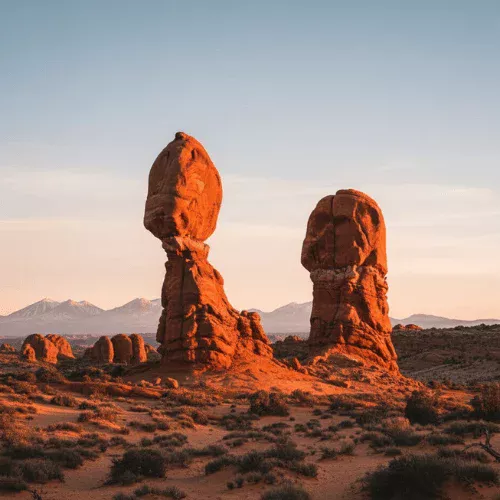
Not every Moab moment has to be a half-day hike or a pre-dawn wake-up. Balanced Rock is one of those rare places where you can step out of the car, walk a short loop, and still feel like you're standing inside a postcard. It is quick, easy, and unforgettable, especially at sunset. Balanced Rock: Nature's Balancing Act Balanced Rock looks impossible at first glance: a massive boulder of Entrada sandstone perched on a slender pedestal of softer rock. The whole formation rises about 128 feet from the desert floor, and the "balancing" rock itself is roughly the size of three full-size school buses. Over time, erosion has carved away the softer base while leaving the upper block intact. Eventually, gravity will win, but for now it sits there, paused in a geologic magic trick. From the right angle, you can see the La Sal Mountains rising in the distance behind it, the red rock glowing even deeper as the sun gets low. Balanced Rock Visit Guide: Distance, Difficulty & Best Time Distance: About 0.3 miles round trip (short loop trail) Elevation gain: Minimal Difficulty: Easy (family-friendly, stroller-accessible in good conditions) Best time: Golden hour and sunset Balanced Rock is located along the main park road in Arches National Park, easy to spot and well signed. There is a parking area and a short, mostly paved loop that circles the formation. Along the loop, you get: Close-up views of the base and the "balancing" boulder Different angles that show just how dramatic the overhang really is Big-sky desert views in every direction A few things to know: Parking is limited and can fill up during peak midday hours. The trail is generally easy, but can be icy or snowy in winter. This is a great "leg-stretcher" stop on your way in or out of the park. What Nobody Tells You Balanced Rock is one of the best "first stops" when entering Arches. It sets the tone without the time commitment. Sunset here can be stunning: glowing red rocks and soft mountain hues behind. It is perfect for families. Toddlers to grandparents can enjoy the loop. Cloudy evenings often bring richer color and better photos. At night, it is an easy-access stargazing spot. No hike needed; just look up. Why Balanced Rock Sticks With You Balanced Rock is not an all-day adventure, and that is exactly why it stands out. You remember standing directly underneath it, tilting your head back, feeling impossibly small. You remember how it shifted shape as you walked the loop, from solid and sturdy to impossibly delicate. You remember the exact shade of red it turned at sunset. The silence afterward. How the whole desert seemed to pause. It becomes the “we almost skipped this” stop you are so glad you did not. Stay at Balanced Rock Cabin After a day of exploring Arches, mixing big hikes with quick sunset stops, it feels good to come back to a place that is just as simple and satisfying. That is why we named one of our tiny homes Balanced Rock Cabin. All of our tiny homes are located at 1251 Millcreek Dr, Moab, Utah, just a short drive from the Arches National Park entrance and downtown Moab. Balanced Rock Cabin is your effortless basecamp for big days and low-effort rewards. At Balanced Rock Cabin, you will find: A full kitchen for sunrise breakfasts and post-park meals A private, comfortable space to scroll photos and kick back Climate control to cool off or warm up depending on the season A soft bed and linens that make short naps after sunset extra cozy Guest Tip: “Balanced Rock was the perfect stop at golden hour. We were back at the cabin sipping wine 30 minutes later. Magic.” — Chris & Emily, May 2024 You are minutes from: Arches National Park and the Balanced Rock viewpoint Easy stops like Park Avenue, The Windows, and Double Arch Downtown Moab’s food, coffee, and gear shops Primary CTA button: Text: Check Availability for Balanced Rock Cabin URL: /cabins/balanced-rock Secondary CTA button or link: Text: Explore All Moab Tiny Homes → URL: /cabins Frequently Asked Questions Q: Is Balanced Rock kid-friendly? A: Yes. The short loop is stroller- and toddler-friendly. Just stay on the trail and respect the fragile soil. Q: How long does a visit to Balanced Rock take? A: Twenty to forty minutes is typical, but sunset lovers may stay longer. Q: Can I see Balanced Rock without walking the loop? A: Yes. It is visible from the parking area and road, but the loop offers better views. Q: Is it accessible? A: Parts of the trail are paved and relatively smooth. Check NPS accessibility updates for the latest information. Q: When is the best time to photograph it? A: Sunset is iconic, but early morning light also works well. Avoid harsh midday sun. Q: Can I visit if the park is full? A: With a valid timed-entry pass, yes. Balanced Rock is near the entrance, so it is one of the most accessible spots once you are in. More Moab Adventures from Your Cabin → Mill Creek Falls: Desert Oasis and Swimming Holes → Delicate Arch: Moab’s Most Iconic Hike → Corona Arch: The Underrated Giant → Mesa Arch at Sunrise: Photographer’s Dream See All Moab Activity Guides → (/activities)
Balanced Rock in Moab: Sunset Stop + Your Tiny Home Basecamp

The Rivers

The Colorado and Green Rivers divide the park and offer recreational opportunities. Flatwater sections upstream of their confluence are ideal for serene float trips by canoe or kayak. Cataract Canyon: Located downstream of the confluence, it is a world-class stretch of whitewater rapids.

The Rivers
The Rivers
The Maze

The Maze

most remote, wild, and least accessible district, reserved for expert wilderness travelers. a rugged labyrinth of deep, winding canyons that requires more time, a greater degree of self-sufficiency, and typically a high-clearance, four-wheel-drive vehicle for access to the trailheads. There are limited facilities and no potable water sources in this district

The Maze

The Needles

Named for the colorful, striped sandstone spires that dominate the landscape. It is a hiker's heaven with an extensive system of interconnecting trails for day hikes and backpacking, as well as challenging four-wheel-drive roads. Key Features & Hikes: Chesler Park Loop/Joint Trail: A popular, longer hike through stunning formations. Elephant Hill: A challenging 4WD access road. Roadside Ruin, Cave Spring, Pothole Point: Shorter, interpretive trails. It is less crowded than Island in the Sky and is accessed via Highway 211, about 1.5 hours from Moab

The Needles
The Needles
Book Direct - Best Price, Best Stay